When Oak Creek turned dark after recent storms, the color alone was enough to stop people in their tracks. Photos and reports circulated quickly, along with a lingering question: was this really from the fire?
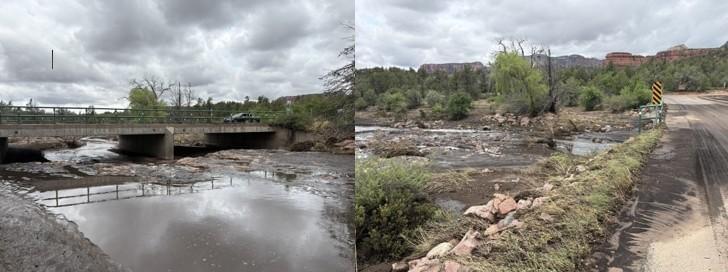
I had a hard time accepting it myself, so I reached out to someone who has spent decades working at the intersection of fire and landscape—Dick Fleishman, known to many as the media liaison during the Pocket Fire. These days, he’s wearing a different hat with the Burned Area Emergency Response (BAER) team, helping communities understand what happens after the flames are gone.
Patient as ever with a journalist still learning the language of fire recovery, Fleishman didn’t hesitate to clear things up.
“That’s not true,” he said, addressing claims that the black water wasn’t tied to the burn. “The ash is from the fire, and it’s getting into Oak Creek from West Fork.”
What’s happening now is part of a well-documented but still jarring post-fire pattern. According to Fleishman, the first few storm events after a burn can produce what he calls “hyper-concentrated” flows.
“In those first two or three events, 40 to 60 percent of what you’re seeing in the water can be ash and debris,” he explained.
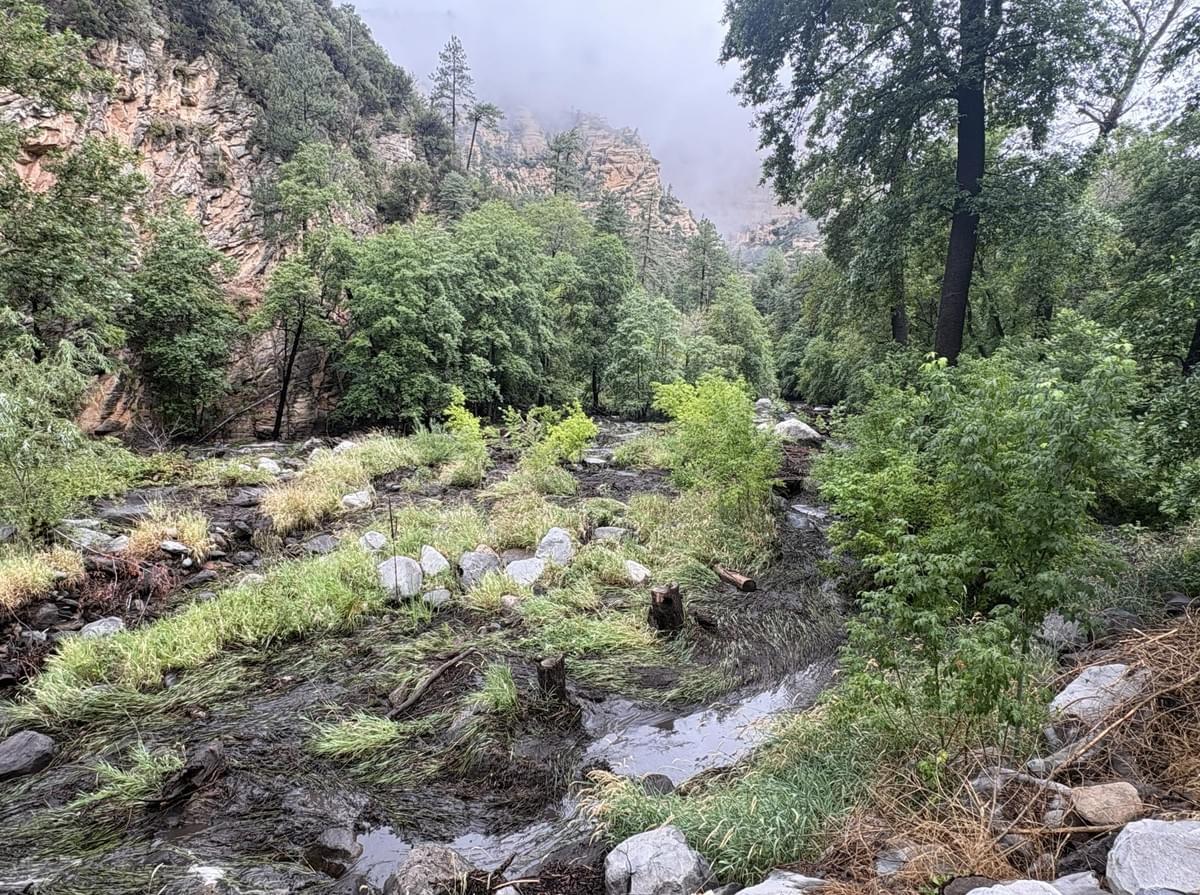
The difference lies in how fire changes the land. Normally, forest soils act like a sponge, absorbing rainfall. But after an intense burn, especially on steep slopes like those above West Fork, the ground can behave more like a roof—shedding water instead of soaking it in.
That shift dramatically increases runoff and flood potential.
“We have a high likelihood of more flood events,” Fleishman said. “Flows out of West Fork can increase by as much as 300 percent.”
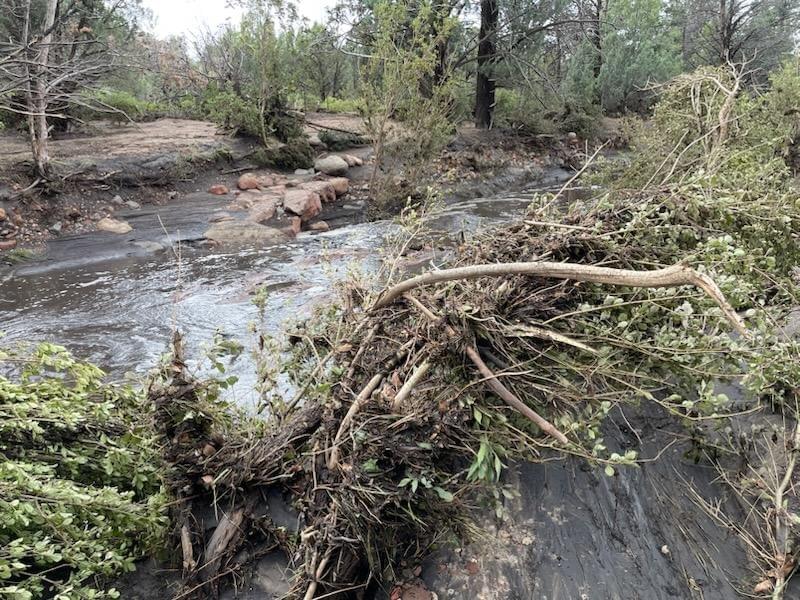
Even relatively modest storms can trigger significant runoff. A rainfall of just .92 inches in an hour can represent a two-year storm event in this landscape, while 1.5 inches approaches a five-year event.
The good news is that the darkest, ash-heavy flows are temporary
“After two or three flooding events, most of that ash gets flushed out,” Fleishman said. “After that, you’re still dealing with sediment, but not that same black water.”
Recovery, however, is measured in years, not weeks.
Post-fire landscapes depend on revegetation to stabilize soils and restore more natural water absorption. On steep slopes, that process can take two to three years. Until then, the risk of sediment-laden runoff and localized flooding remains elevated.
Efforts to manage these risks are already underway. BAER teams, along with partners including Coconino County and state agencies such as the Arizona Department of Environmental Quality, are working to assess impacts and implement stabilization measures where possible.
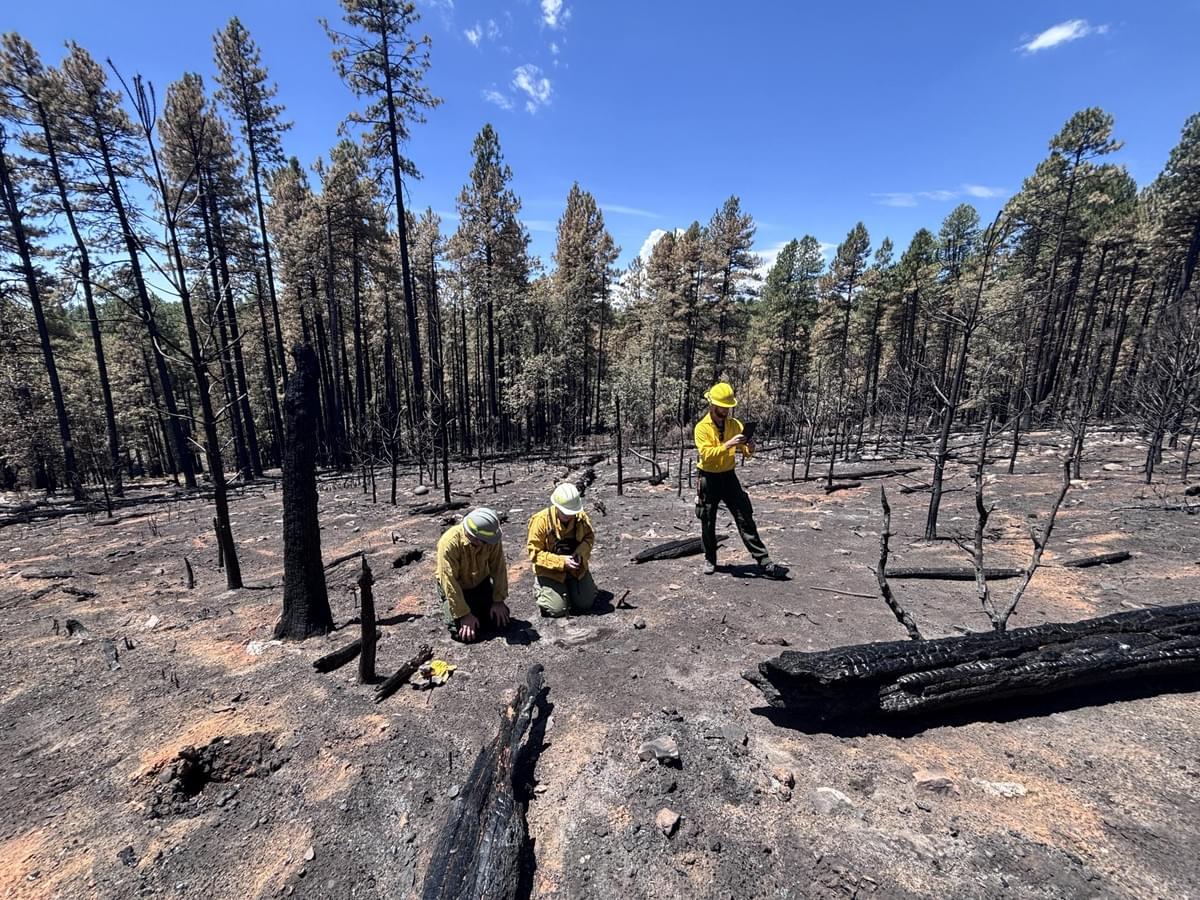
For now, the sight of black water in Oak Creek is unsettling—but not unexpected.
It’s a visible reminder that wildfire doesn’t end when the flames are out. In many ways, the next chapter is just beginning.